
Podcasts
Be Heard – Alan talks human connection on the Deep Listening Podcast
Alan shares tips and tricks for becoming more effective when listening, and really getting to the heart of what is being said. He talks about authenticity and how to be deeply empathetic to the dialogue as it happens. He explores the role of judgement, and how it takes away from the impact of the conversation.
Hope In The Dark – Alan opens up on ABC Radio
For a long time, Fairfax columnist Alan Stokes has had a successful career and family life, while also living with suicidal thoughts. He describes it as ‘living in a box’, in that you are functioning but still hiding away your secrets from the rest of the world. The death of former Wallaby Dan Vickerman prompted him to share his story, along with the message that a simple question like ‘how are you’ can begin a path to recovery.
STOP! In the name of luurv
The race is on to get out of lockdown so we can return to the good ol’ days. The kids will be back at school soon, too. Bring it on. Can’t wait.
Hey! Slow down speedy!
What happens when that leisurely drive to the beach or the park becomes a traffic nightmare again?
When kamikaze corner at Bilgola once more lives up to its name?
And when the traffic-free amble for essential workers and tradies becomes a crawl up Mona Vale Road, standstill across the Spit and walk-fest up Warringah Road? We’ll be jostling for road space with thousands of hairdressers, shop assistants, bar staff, school buses and city workers.
I’m tipping high anxiety, stiff central digits, road rage and a chorus of “I wish we had the simple lockdown life again!”
The Beaches has become a commuter paradise – or traffic nightmare.
Traffic stress breeds speed not only on the road but also in the brain.
The faster we think and feel and react to tailgaters or trucks in the outside lane, the more we internalise or act out our anger.
So here’s a tip: STOP.
STOP stands for: Slow down (breathe). Take a step back (maybe pull over for a bit). Observe how quickly you are thinking, check whether your response is in proportion to what happened, and consider how pointless getting angry or lashing out is anyway. Then, when you are calmer … Proceed mindfully, and slowly, driven by values such as: “I am a nice person who accepts that some things are out of my control.”
STOP comes Dialectical Behaviour Therapy. DBT avoids extremes and seeks a tolerable middle road for a life worth living.
And guess what? The Beaches we luuurv will still be there, even if our commute drags on a bit.
AH-HOOOO! I feel a mad moon rising
Under the Full Moon you’ll feel pressure in your head akin to a monster tide rushing in.
The pressure in your head will make you unbearable to be around.
You’ll become a lunatic and want to scream at the stars.
Believe me?
Quite possibly. After all, werewolves howl at the Full Moon, so why shouldn’t we?
Problem is, wolves don’t howl only at the Full Moon.
And the Full Moon will not make you a temporary “loony”.
Yes, the Full Moon brings more extreme tides due to the combined gravitational pull of the Sun and the Moon.
However, scientific studies reject that these monster tides make you a lunatic.
The closest the studies get to proving the Full Moon effect is that some people living with Bipolar Disorder note they shift from a low to manic mood.
The rational reality is that our brains just like to find quick answers to our problems. They seek out information that confirms what we believe, while filtering out alternatives.
That’s why some people find relief in ancient myths.
When we have tough days and annoy our loved ones, the Full Moon excuse fits nicely for a few days.
Me? When I feel that monster tide rushes through my head on a Full Moon, I’ll seek out a quick fix of Warren Zevon: Ah-hoooooo! Werewolves of London.
CHILL OUT! Cold water calms all year
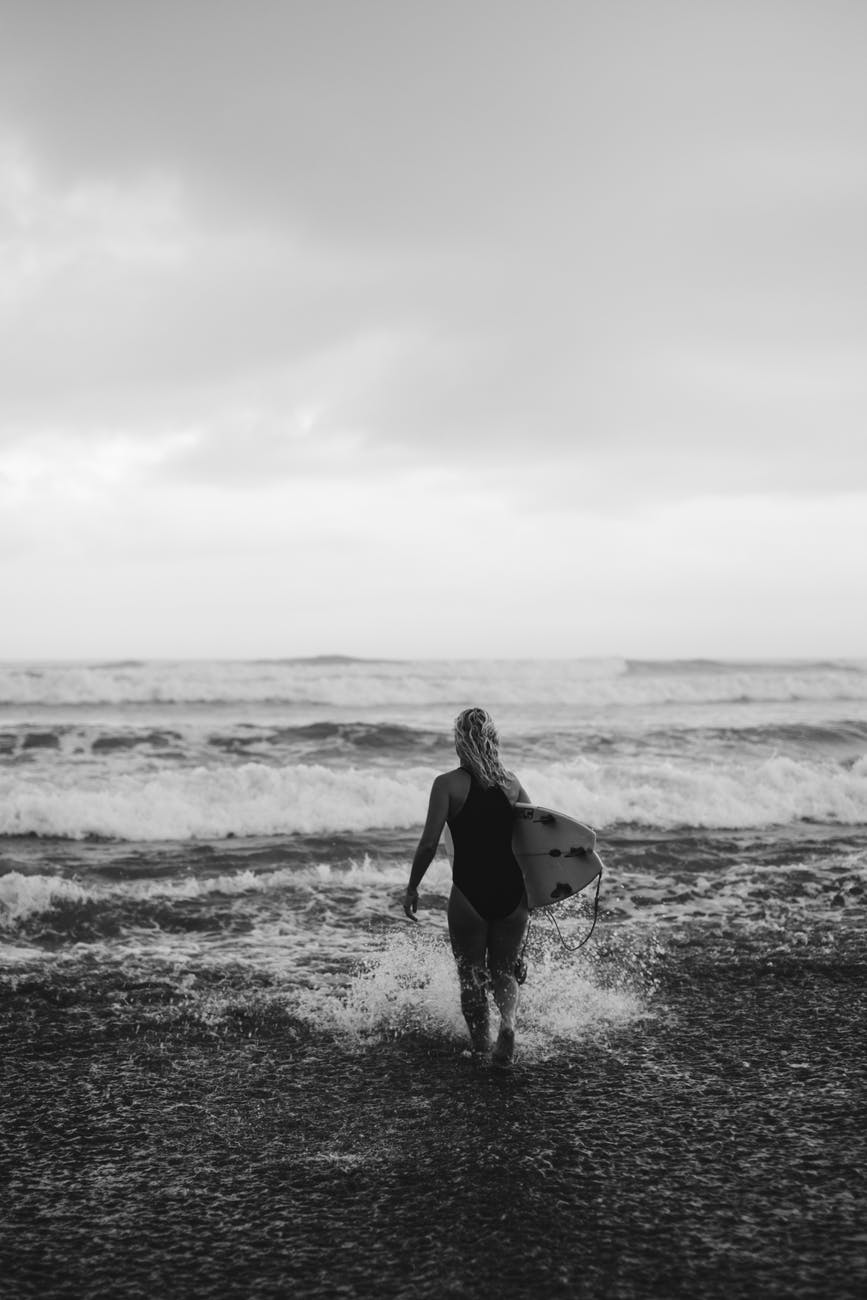
To wet suit or not to wet suit, that is the question.
And the answer for people struggling with anxiety is … surprising.
Across the Beaches, the water temperature is still 17-18 degrees Celsius, or 62-65 degrees Fahrenheit.
Only the brave or allegedly stupid are out there without a wettie.
But what if the bare-skinned are improving their mental health with a chilly dip?
When we sense danger real or imagined, our brains and nerves tell us we need to prepare. This requires our breathing to quicken and heart rate to increase to pump oxygen-full blood to our big muscles ready for a fight or to flight (run away).
By contrast, the act of holding our breath and plunging headfirst into cold water mimics our dive response. This tells our body to slow down breathing and heart rate so we can preserve energy. This slowdown helps offset our anxiety response.
Hence, we calm down when we jump into cold water, have a cold shower or splash our face with cold water.
But how cold?
The doyenne of Dialectical Behaviour Therapy (DBT), Masha Linehan, says no colder than 50 degrees Fahrenheit. That’s 10 degrees Celsius. The water rarely gets below 16C on the Beaches.
So wetsuit or not, the Temperature shift of a cold dip washes away your worries. Add in some Intense exercise for a short period, some Paced breathing and Paired muscle relaxation, and you have an effective mental wellness TIPP.
GOODBYE PERFECTIONISM! Hello freedom to be you, just as you are
Today I’m planning to write this perfect article on something very high on my list of priorities …
Sorry, gimme a sec, I need to close the window.
So, the topic is …
Excuse me, I just have to …
Right. Back now.
So how’s that Christmas shopping going for you?
“Ah,” you say. “I’ve written a long list but haven’t quite made it to the Mall or ordered those personalised chocs, socks and jocks online.”
Me neither.
We often put off Christmas shopping – and plenty more tasks.
We procrastinate, write lists and expand them, seeking every distraction to avoid just getting stuff done.
Why?
Because we tend to set ourselves unflinching, unforgiving rules about what makes a task successful.
The Chrissie pressies we give have to be memorable … or we’re worthless. They have to be thoughtful, unique and wrapped just right with a fancy ribbon … or we’ll be rejected.
We beat ourselves up so much about being perfect at what we do that eventually the pressure scares us off even starting a task.
We withdraw into procrastination for fear of failure.
What can you do?
Try changing your strict rules into something kinder to yourself: “I will try my best, given how I am feeling and given my circumstances.”
Then feel the freedom to be you, no ribbons attached.
 Alan Stokes Therapy